Last updated October 30, 2026
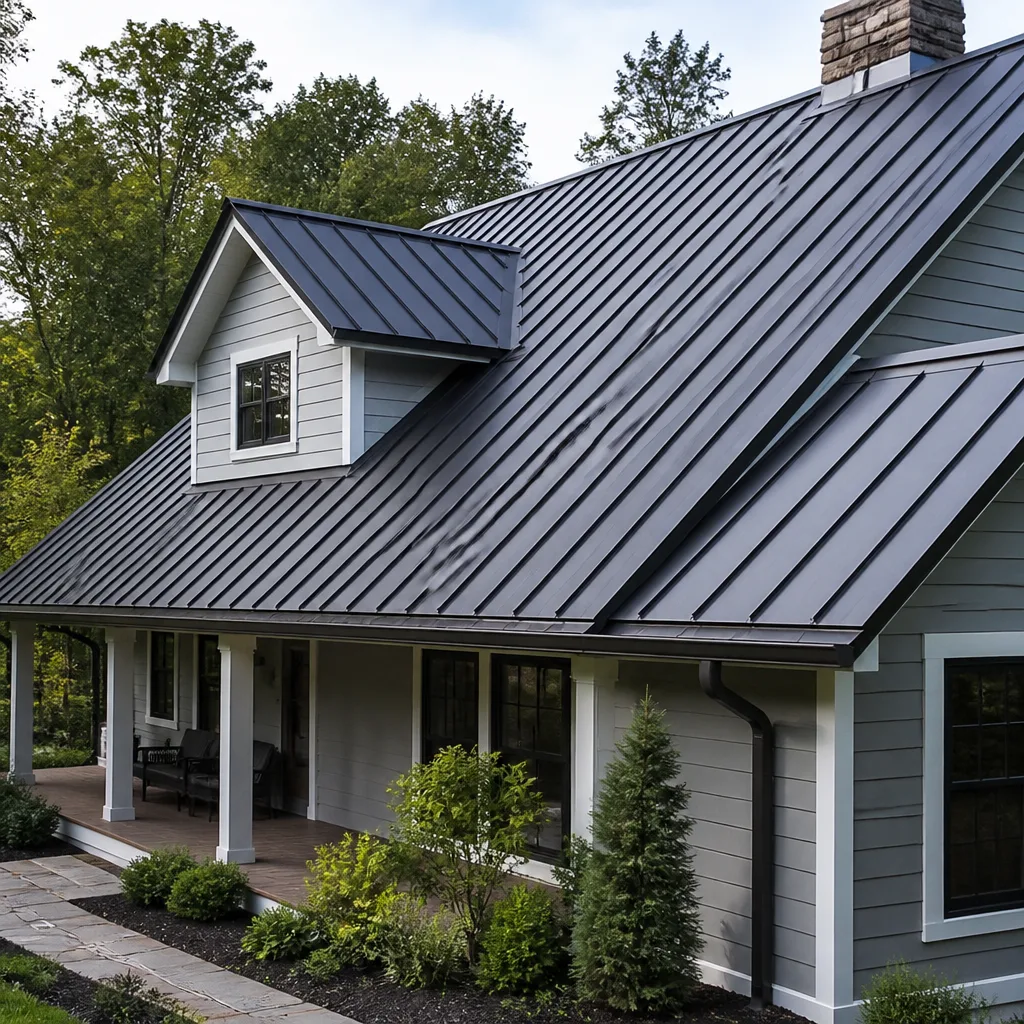 Metal roofing
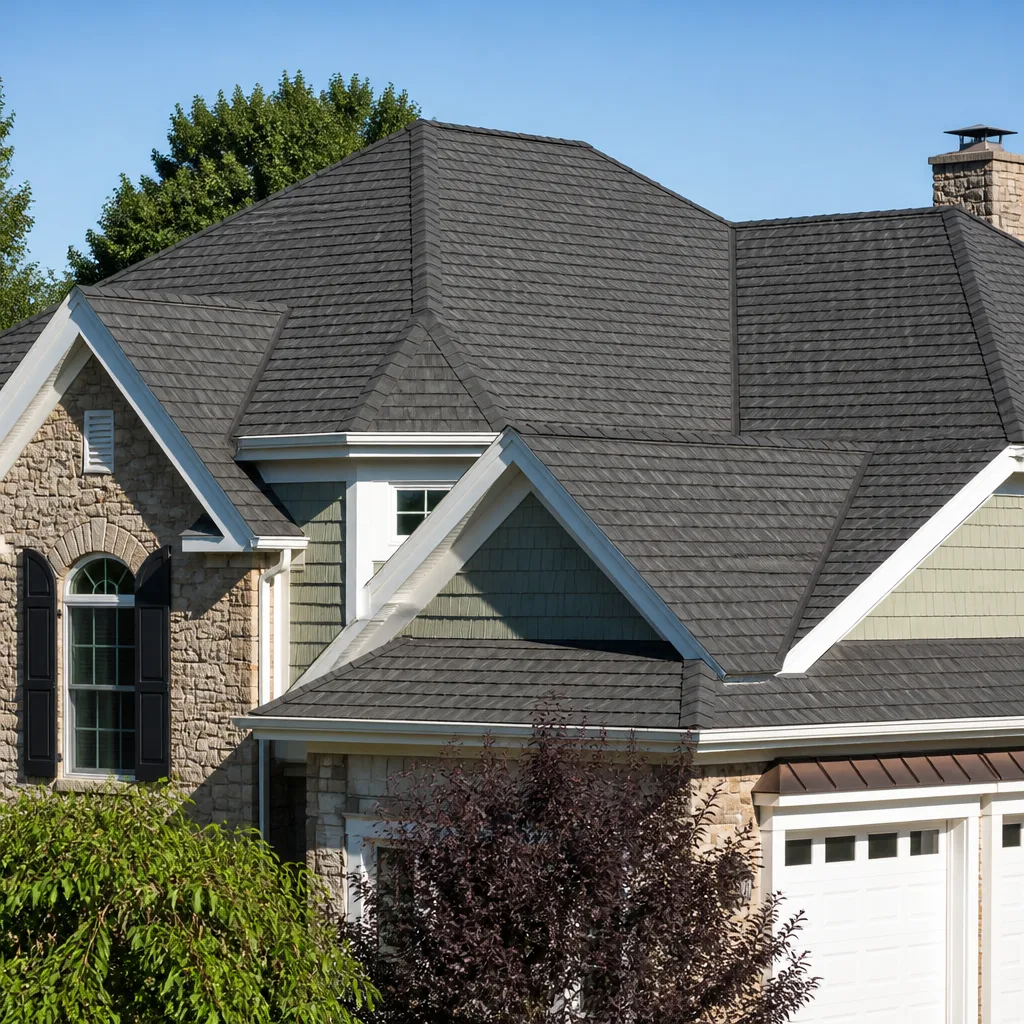
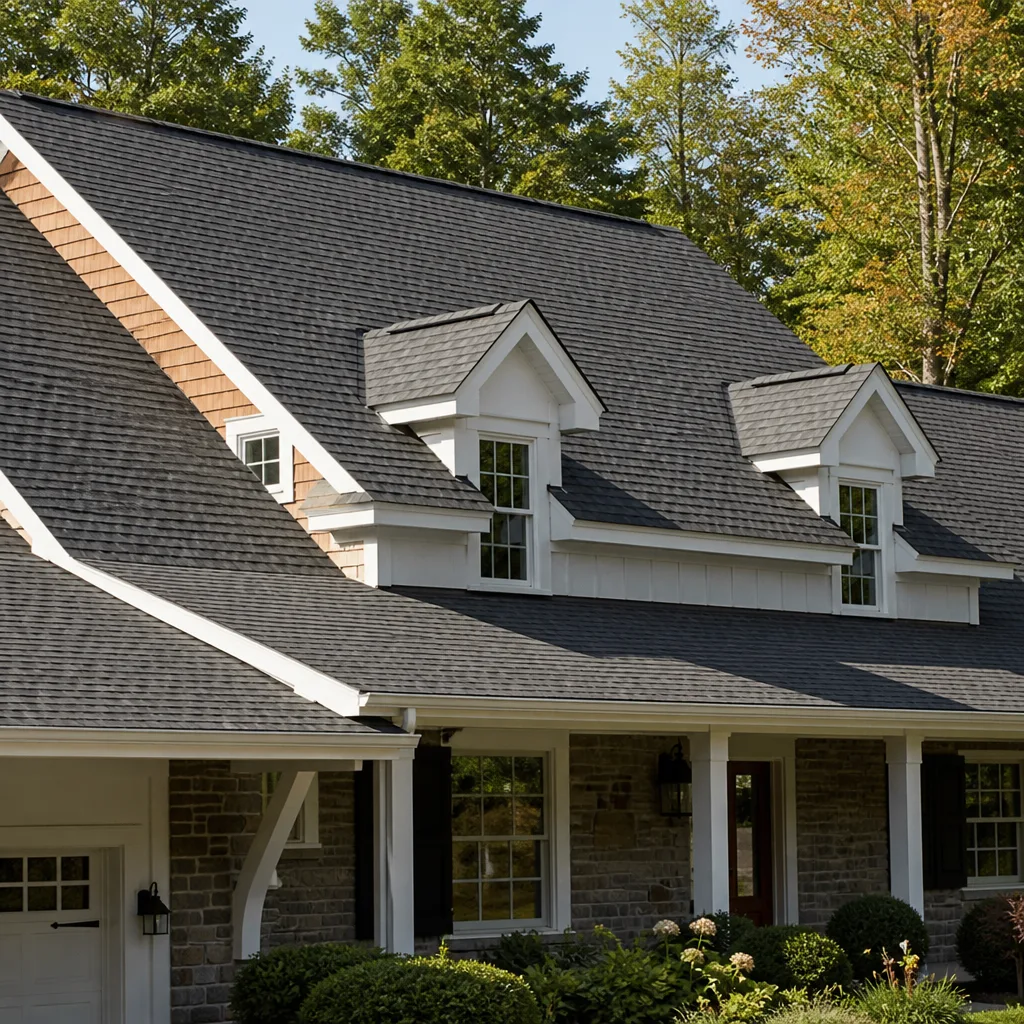 Architectural shingles
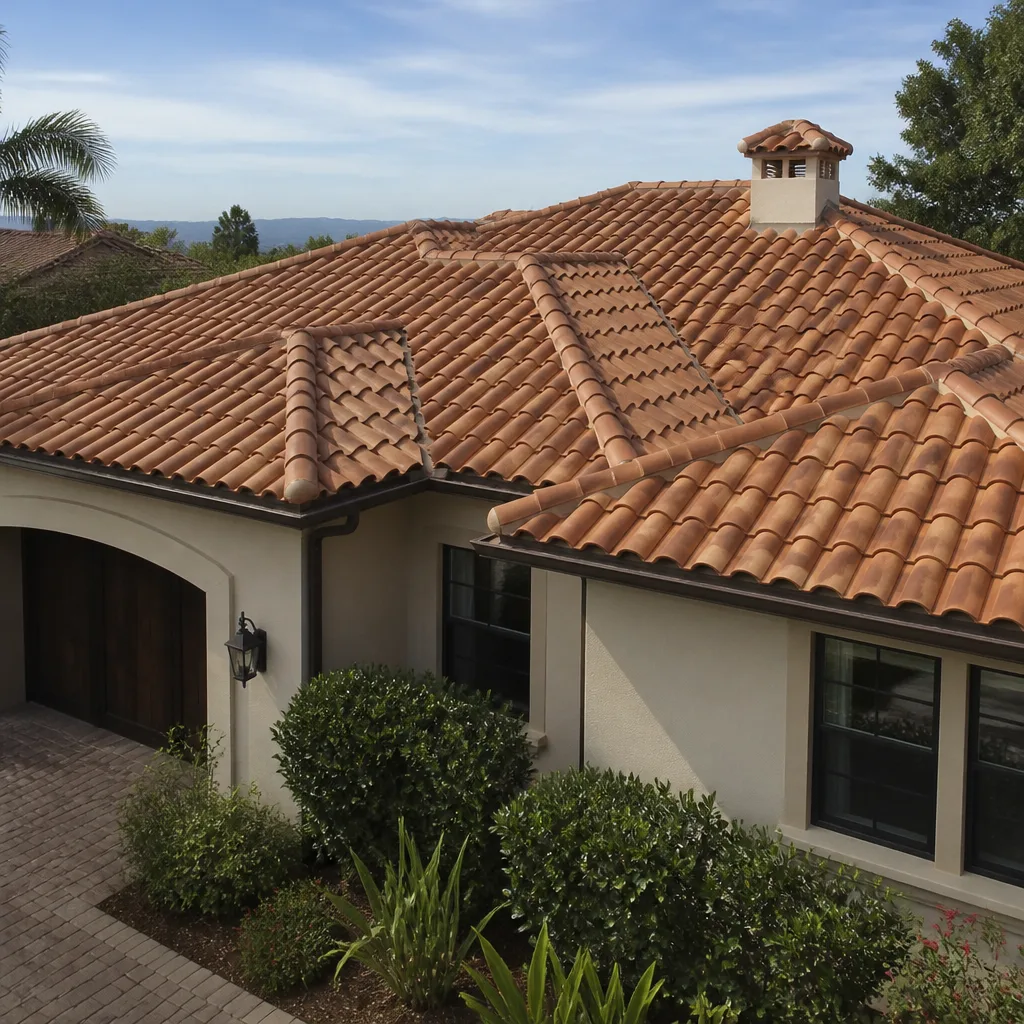 Tile roofing
 GAF
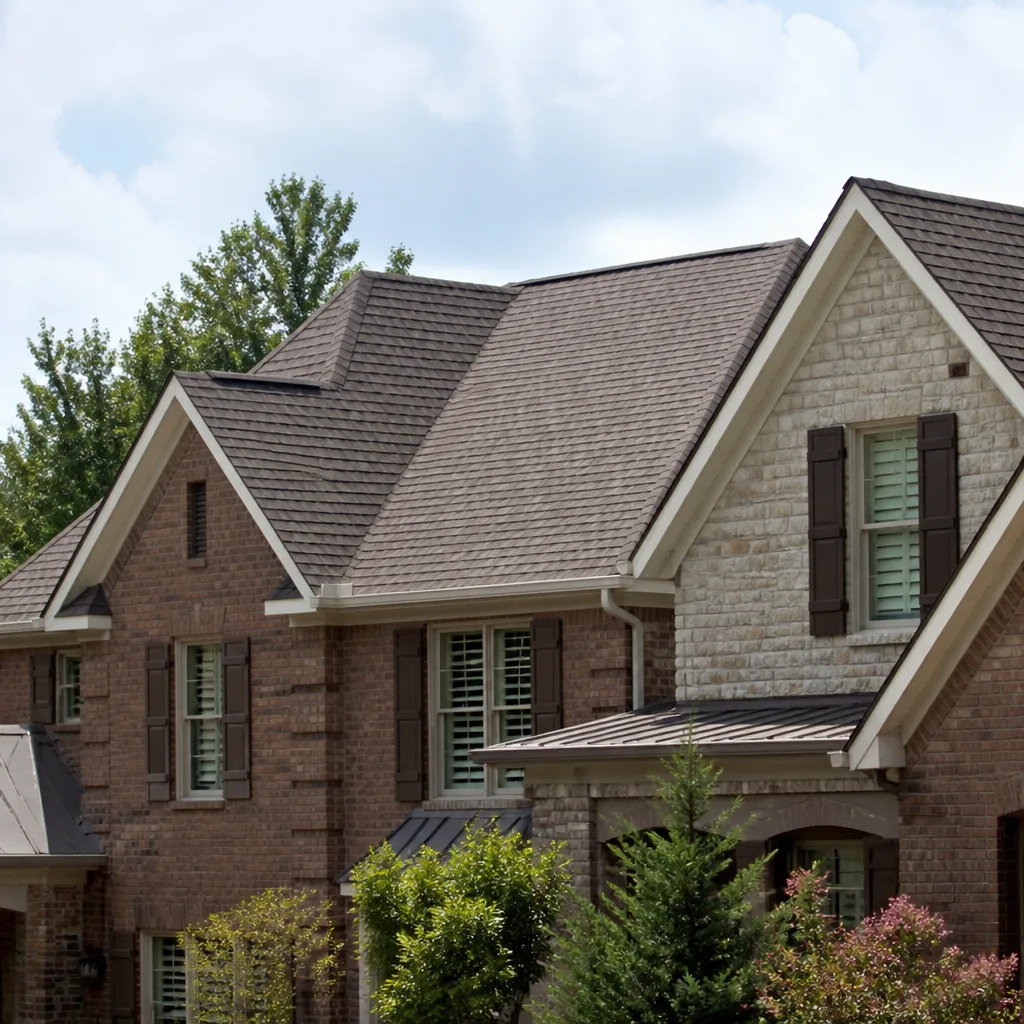 Owens Corning
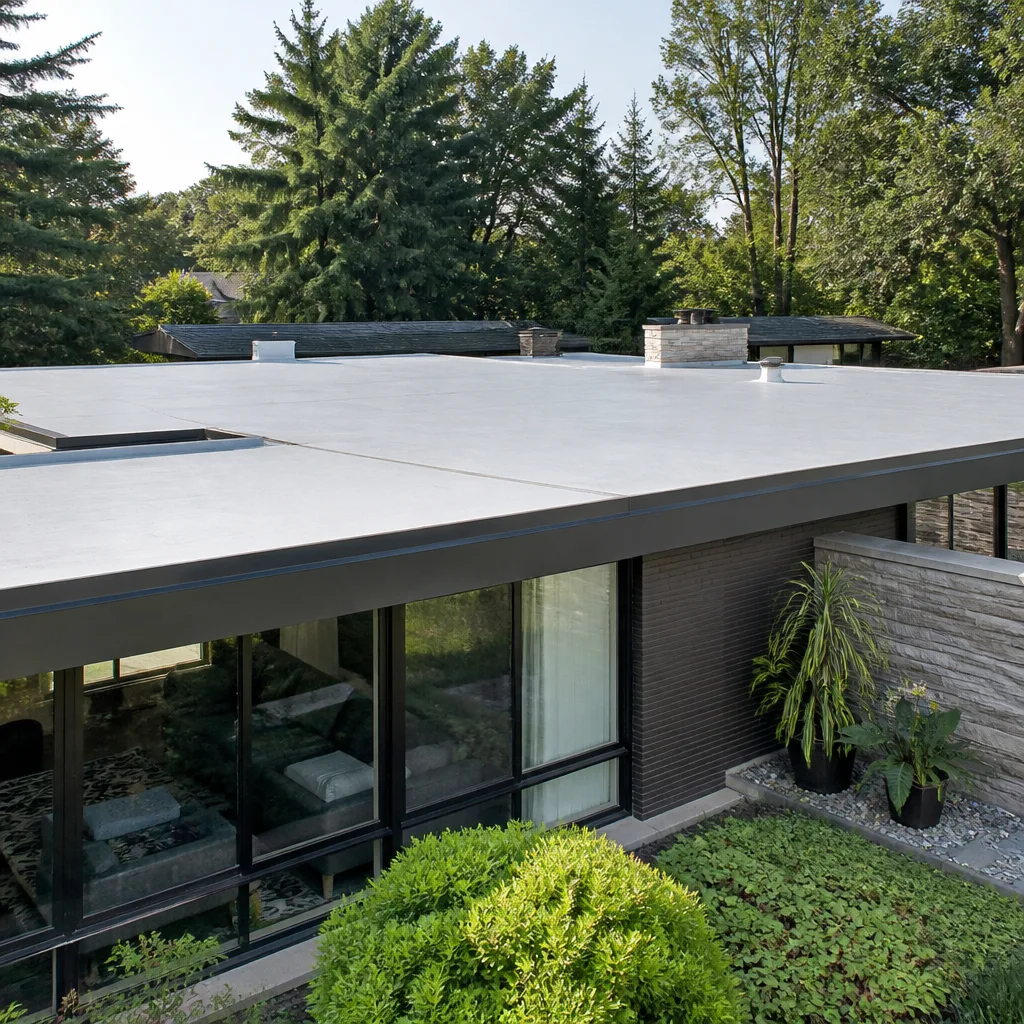 Flat & low-slope
Free roof inspection with deck photos before we talk money - GAF and Owens Corning certified installation
How to Hire a Roofing Contractor in Ontario: A Step-by-Step Guide
Here’s a fact most Ontario homeowners never hear: the roof most likely to fail early isn’t installed by an unlicensed chaser working out of a pickup. It’s installed by a fully licensed contractor who recommended the wrong material for your specific home, not because they didn’t know better, but because their manufacturer agreement pays them more to push one product line. A C-39 license proves a contractor is legal. It says nothing about whether the advice you’re getting is being steered by a supplier relationship instead of what your roof actually needs. Ontario’s heat, Santa Ana winds, and sudden winter downpours punish the wrong material choice within five years. This guide gives you the exact questions, verification steps, and contract clauses that separate a roofer who works for you from one who works for their supplier, and it’s written from the ground up for hiring a roofing contractor in Ontario, California.
Quick Answer
To hire a roofing contractor in Ontario, CA, verify their C-39 license on the CSLB website, confirm they carry workers’ compensation and general liability insurance, ask directly whether they’re locked to one shingle manufacturer or can source from multiple brands, and get a written contract that specifies scope, materials, payment schedule, and change-order rules before any work begins. A legitimate contractor will also offer a standalone inspection that documents your roof’s condition without attaching a sales pitch to every finding.
Styles & brands we work with
Table of Contents
- Verify the C-39 License: What the CSLB Lookup Tells You (and What It Doesn’t)
- The Supplier-Exclusivity Question: Why It Changes Your Estimate
- Get an Inspection Before You Get a Bid
- How to Read a Roofing Contract: Five Clauses That Protect You
- Red Flags for Inland Empire Storm Chasers
- Insurance, Workers’ Comp, and Why It Matters in California
- Matching the Right Material to an Ontario Roof
- How to Compare Roofing Bids Side by Side
Verify the C-39 License: What the CSLB Lookup Tells You (and What It Doesn’t)
California requires any contractor performing roofing work on a project valued at $500 or more to hold a C-39 Roofing Contractor license issued by the Contractors State License Board. The lookup tool on the CSLB website is free, takes two minutes, and tells you whether the license is active, how long it’s been held, whether there are any pending complaints or disciplinary actions, and the name of the qualifying individual on the license. You can find it at cslb.ca.gov under “Check a License.”
Here’s what that lookup does not tell you, and it’s the gap that costs Ontario homeowners real money. The CSLB does not track whether a contractor is bound by a supplier or manufacturer agreement. It does not tell you that the contractor you’re considering can only install one shingle brand because they’ve signed a volume commitment with a distributor. It does not flag the contractor who is technically free to install anything but quietly defaults to one product line because the rebate structure is better. When we inspect roofs in Ontario, we routinely find homes five to eight years into a “30-year” shingle where the material was a poor match for the home’s sun exposure, and the homeowner trusted a license to mean impartial advice. A license is the floor, not the ceiling.
Step one is non-negotiable. Step two is asking the question the license can’t answer, and we’ll get to that in the next section.
The Supplier-Exclusivity Question: Why It Changes Your Estimate
Ask a contractor this directly: “Are you locked into one shingle manufacturer, or can you source from multiple brands?” Watch the reaction. Some will answer immediately with a brand list. Others will pause, then explain that they “partner” with one manufacturer because it’s “what they trust.” A few will get defensive, and that defensiveness is information.
Here’s why the answer changes the number on your estimate. Roofing contractors who commit to a single manufacturer often receive volume rebates, marketing funds, or preferential pricing through a specific distributor. That structure incentivizes them to recommend the product that maximizes their margin, whether or not it’s the best product for your home’s orientation, slope, or budget. A roofer who works across multiple brands can show you a CertainTeed option next to an Owens Corning option next to an IKO option, and explain the actual performance and price difference without a financial thumb on the scale. At Hawk Roof Repair, we work with seven major manufacturers, including CertainTeed, Owens Corning, IKO, and Atlas, because the right material for a north-facing roof in a low-slope Ontario neighborhood is not automatically the right material for a steep south-facing slope that bakes all summer. You should have a choice, not a take-it-or-leave-it.
If a contractor tells you every other brand is inferior to the one they install, that’s not expertise. That’s a sales script. The honest answer almost always includes trade-offs: impact resistance versus cost, aesthetic match versus availability, warranty length versus real-world performance in the Inland Empire’s UV-heavy climate. A straight answer to the supplier question earns a contractor a serious look. A dodge earns a crossed-off name.
Get an Inspection Before You Get a Bid
The order of operations matters more than most Ontario homeowners realize. If the first thing a contractor does is hand you a bid, you’re skipping the step that makes the bid meaningful. A legitimate roofing assessment documents the actual condition of your roof, the remaining life of each component, and the specific failure points that need attention, and it does this without automatically concluding that you need a full replacement.
Here’s what a legitimate inspection report from an Ontario roofer should include:
- Photographs of every roof plane, not just the slope visible from the driveway
- Specific measurements of worn areas, lifted shingles, or cracked valleys
- Documentation of flashing condition at chimneys, skylights, and wall intersections
- The age and condition of the underlayment where visible, based on attic access or roof penetrations
- A written summary that separates “needs attention now” from “monitor over the next 2 – 3 years”
- No automatic conclusion that replacement is required unless the evidence supports it
What you don’t want is a “free inspection” that lasts fifteen minutes and produces a three-page sales brochure with your name at the top. That’s a sales document disguised as an assessment, and it’s a common pattern in the Inland Empire after wind events. The roofer who spent half an hour on the roof writing notes and taking photos is doing the job. The roofer who spent half an hour in the living room building urgency is rehearsing a pitch.
An inspection-first approach also protects you from overspending. If a roof has five years of life left in the shingles but failing flashing around two plumbing vents, that’s a repair conversation, not a replacement conversation. You’d only know the difference if the inspection actually measured the roof instead of measuring your budget. We inspect first, every time, and we scope the problem before we discuss price. For a deeper look at what’s involved, see our Roof Inspection in Ontario page.
How to Read a Roofing Contract: Five Clauses That Protect You
Contracts in the roofing industry range from one-page proposals that say almost nothing to fifteen-page documents dense with legal language. Neither extreme is your friend. You want a contract that is specific enough to hold up in a dispute and readable enough that you actually understand the obligations on both sides. Here are the five clauses that do the most protective work for an Ontario homeowner:
1. The scope-of-work clause. This should specify exactly what will be done: how many squares of shingles, which underlayment, what type of flashing, whether existing shingles are removed or overlaid, what happens to the old material, and whether gutter protection or drip edge is included. Vague scope language (“install new roof system per manufacturer specifications”) is an open invitation for arguments later. “All materials, labor, equipment, and disposal necessary to complete the described project” is the clause that turns phone calls into change orders.
2. The change-order clause. Every roofing project discovers something unexpected, whether it’s rotted decking under old shingles or hidden water damage near a chimney. The contract should state that any additional work or cost requires a written change order signed by you before the work proceeds. If this clause is missing, the contractor has more room to perform extra work and bill for it after the fact.
3. The payment schedule clause. California law limits the down payment on a home improvement contract to the lesser of $1,000 or 10% of the project total. A contractor asking for 30% or 50% upfront is either unfamiliar with the law or confident you are. Make sure the schedule ties payments to milestones, not to vague time periods, and never pay in full before the job is complete and passable.
4. The timeline and weather-delay clause. Ontario’s roofing season is mostly dry, but winter rains and Santa Ana wind events interrupt work. A fair clause states that weather delays extend the timeline without triggering penalties for either party, and it should also name an expected start window and an estimated duration once work begins.
5. The clean-up and property-protection clause. A roofing tear-off produces thousands of nails and pounds of debris. The contract should state who is responsible for daily clean-up, final magnetic sweeping for nails, dumpster placement, and protection of landscaping. The absence of this clause usually means the roofer does the minimum and you spend spring finding nails in the flower beds.
Two clauses that typically favor only the contractor: a mandatory arbitration clause that waives your right to small-claims court, and a “no oral agreements” clause paired with a statement that only the contractor’s representative can authorize changes. The first limits your legal options; the second can be used to deny verbal assurances you were given. You can push back on both.
Red Flags for Inland Empire Storm Chasers
After every wind event in the Inland Empire, a predictable pattern follows. Contractors appear, knock on doors in affected Ontario neighborhoods, offer free inspections, and find “extensive damage” that requires immediate replacement. Some are legitimate local companies responding to real demand. Some are chasers working a circuit from Arizona to Nevada, and their business model depends on speed, volume, and insurance payouts rather than long-term reputation.
Here are the specific red flags we’ve learned to recognize in the Ontario market:
- Out-of-area license addresses. The CSLB lookup shows a business address in another state or a PO box. A local Ontario roofer has a local presence you can verify.
- Door-knocking after every wind event. One knock after a severe storm is normal. A different crew knocking twice a year with the same “just happened to be in the neighborhood” script is a pattern.
- The “insurance specialist” pitch. Chasers often frame themselves as experts at getting insurance to pay for full replacements. The honest version of that conversation is a documented inspection report that supports an insurance claim. The dishonest version is a roofer telling you they’ll “handle everything” with the adjuster, then marking up materials to capture the payout.
- Pressure to sign on the spot. Legitimate contractors understand that a roof replacement is a five-figure decision. They give you time to compare. A chaser’s whole model depends on signing you before you look them up or you’ll find the gaps.
- Cash-only or deep-cash discounts. Cash transactions leave no paper trail and often no warranty protection. A respectable contractor takes a check or card and stands behind the work.
Ontario’s position in the Inland Empire means wind-driven debris from the Cajon Pass and sudden heavy rain create real damage. The key is not to dismiss all post-storm outreach but to verify before you listen. A local company with a verifiable history, a local project list, and no urgency script is a completely different animal than a chaser who vanishes when the work fails.
Insurance, Workers’ Comp, and Why It Matters in California
California does not mess around with workers’ compensation law. If a roofer’s employee falls off your roof and the contractor lacks workers’ comp insurance, that injury can become a claim against your homeowner’s insurance, and in some cases, against you personally. Before you sign anything, ask for a certificate of insurance directly from the contractor’s carrier. It’s a five-minute request that eliminates a category of risk no Ontario homeowner should carry.
You want two coverages confirmed. General liability insurance protects your property if the roofing crew damages something beyond the roof itself, like a window broken by falling debris or a crushed sprinkler head. Workers’ compensation protects you from claims arising from worksite injuries. Both certificates should list you as the certificate holder, and both should be current at the time work begins. If a contractor hesitates to provide documentation, treat it as a hard stop.
There’s also the matter of the contractor’s own classification. The CSLB lookup shows the license classification, and for roofing you want to see C-39. A B-General Building license does not authorize a contractor to perform roofing work in California as a standalone trade, and an active C-39 tells you the qualifying individual has passed the state’s roofing-specific examination. It’s not a guarantee of craftsmanship, but it’s the baseline.
Matching the Right Material to an Ontario Roof
Ontario sits in a climate band that punishes the wrong shingle choice. Summers routinely produce weeks of 95°F-plus heat, with roof surface temperatures that run 40 to 50 degrees hotter than the air. Then the winter brings sudden downpours that hit baked, micro-cracked surfaces hard. Then the Santa Anas arrive in fall and spring, lifting any shingle with a failing adhesive strip or a nail driven just slightly too deep.
Here’s how the material conversation should go when a contractor actually works in multiple brands:
- Orientation and sun load. A south-facing roof plane in Ontario takes far more UV punishment than a north-facing one. Some shingle lines carry better UV-stabilized granule formulas than others. A contractor who knows multiple lines can point you toward the one that handles prolonged sun exposure better without defaulting to the highest-price option.
- Slope and wind zone. Low-slope sections need specific installation techniques regardless of shingle brand. Steep pitches in wind-exposed neighborhoods near the 15/60 interchange benefit from shingles with higher wind ratings, which several manufacturers offer. The brand matters less than the rated product within the brand.
- Aesthetic match. If you’re replacing one slope or patching a section, the ability to source a close color match from multiple manufacturers means you’re not forced into a visible mismatch because one brand discontinued your shingle line. We regularly match existing roofs using our access to multiple lines rather than telling a homeowner they need a full replacement for a partial repair because we can’t get the material.
- Budget reality. Material costs vary meaningfully across manufacturers for comparable performance categories. A multi-brand contractor can show you where the price breaks are and explain what you sacrifice at each step down. A single-brand contractor can only show you where their one brand’s price points land.
The honest version of this conversation ends with a recommendation that fits your specific house and your budget. The dishonest version ends with a recommendation that fits the contractor’s supplier agreement. You now know how to tell the difference.
How to Compare Roofing Bids Side by Side
Once you’ve screened out the chasers, verified licenses, and gotten real inspections, you’ll likely have two or three written bids on your kitchen table. Comparing them line by line is where most Ontario homeowners make their final and most expensive mistake: choosing the lowest total without comparing what each bid actually includes.
Here’s a comparison method that works:
- Put the bids side by side and circle the differences in scope. Same shingle square count? Same underlayment type? Same flashing details? If bid A includes new drip edge and bid B doesn’t, bid B isn’t cheaper; it’s smaller.
- Compare material brands, not just material costs. A bid that specifies “30-year architectural shingles” without naming the manufacturer is hiding something. You want the manufacturer name: Owens Corning, CertainTeed, IKO, Atlas, whatever the bidder proposes. Different manufacturers carry different warranty structures and real-world performance records.
- Check the warranty terms. A 30-year shingle warranty from the manufacturer is not the same as a workmanship warranty from the contractor. Most shingle failures in the first decade are installation failures, and the manufacturer warranty won’t cover those. You want both warranties clearly described.
- Verify who pulls the permit. In Ontario, a roofing permit should be pulled by the contractor, and final inspection should pass before the job is signed off. If a bid says “homeowner responsible for permits,” that’s a red flag.
- Ask about the crew. Is the installation done by the company’s own crew or a subcontractor? Subcontracting isn’t automatically bad, but you should know who’s on your roof and that they’re covered by the same insurance.
After you’ve compared scope, materials, warranty, and permit responsibility, the price comparison becomes meaningful. A bid that’s $3,000 lower but missing drip edge, underspecifies underlayment, and waives the workmanship warranty is the expensive bid disguised as the cheap one.
Common Mistakes to Avoid
- Hiring on price alone. The lowest bid on a roof is usually the smallest scope, the thinnest material, or the shortest warranty. In Ontario’s climate, that math catches up within five years.
- Skipping the CSLB license check. Two minutes on the CSLB website tells you whether the contractor is legal, active, and clean. Skipping it means you’re flying blind on the most basic credential in California roofing.
- Signing a contract with vague scope language. If the contract doesn’t specify the shingle brand, the underlayment, the flashing details, and the disposal plan, you’ve signed an agreement to pay for whatever the contractor decides the job is.
- Paying more upfront than California allows. The state caps home improvement down payments at 10% or $1,000, whichever is less. A contractor who asks for more is violating the law before the job starts.
- Letting the contractor handle the insurance claim without your involvement. You need to understand what the adjuster found and what the contractor is proposing. Handing the whole thing off leaves you liable if the claim is inflated or the work doesn’t match what the insurance company approved.
- Replacing a roof that only needed repair. A roof with five years of life left and localized flashing failures doesn’t need a full replacement. It needs a contractor who does honest repairs. If every contractor you call wants to replace before anyone has documented the actual condition, keep calling.
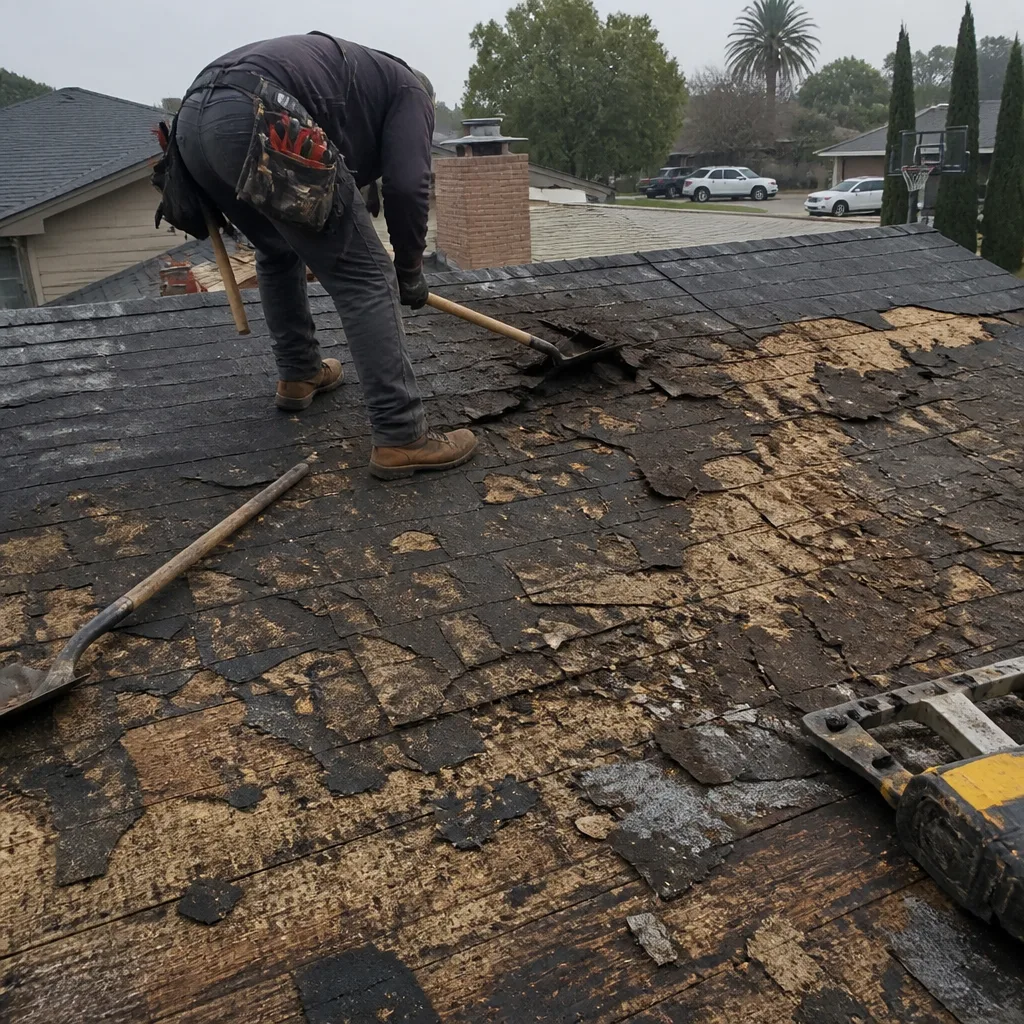
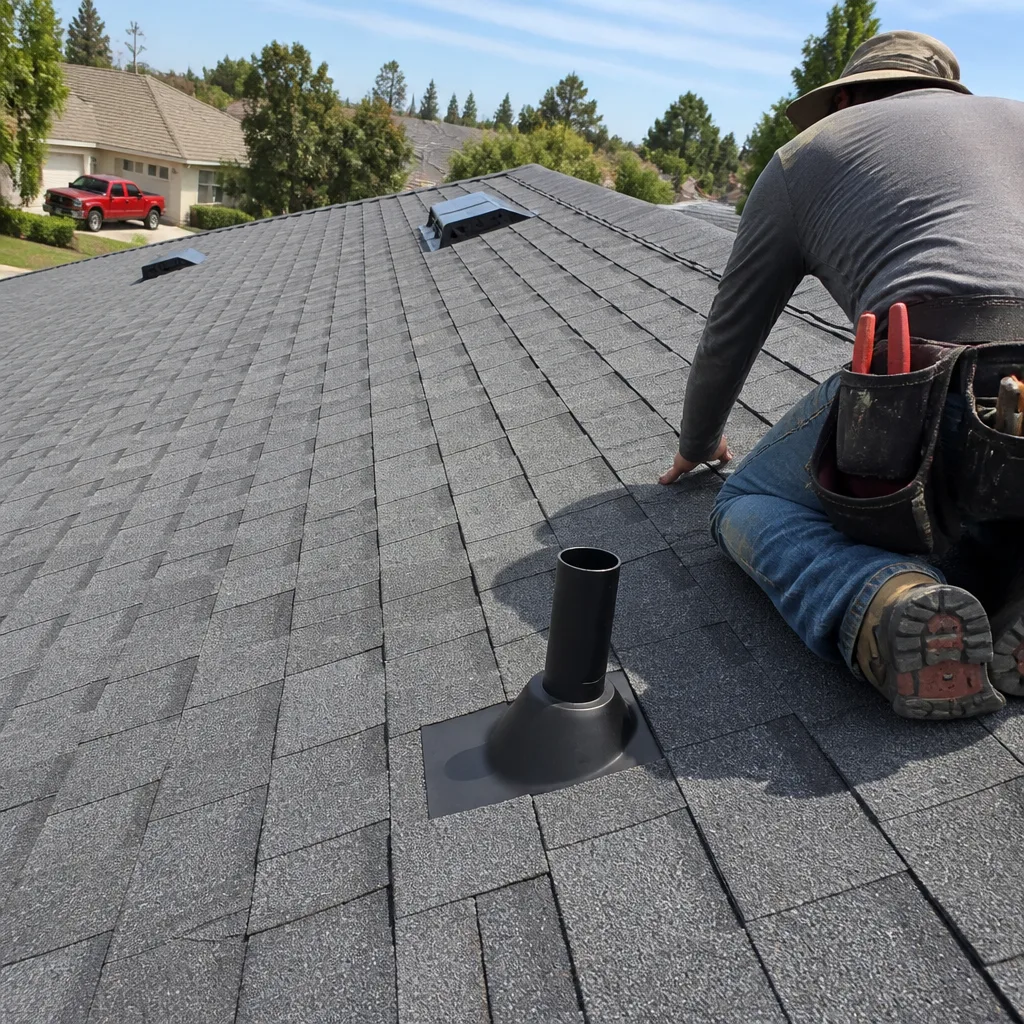
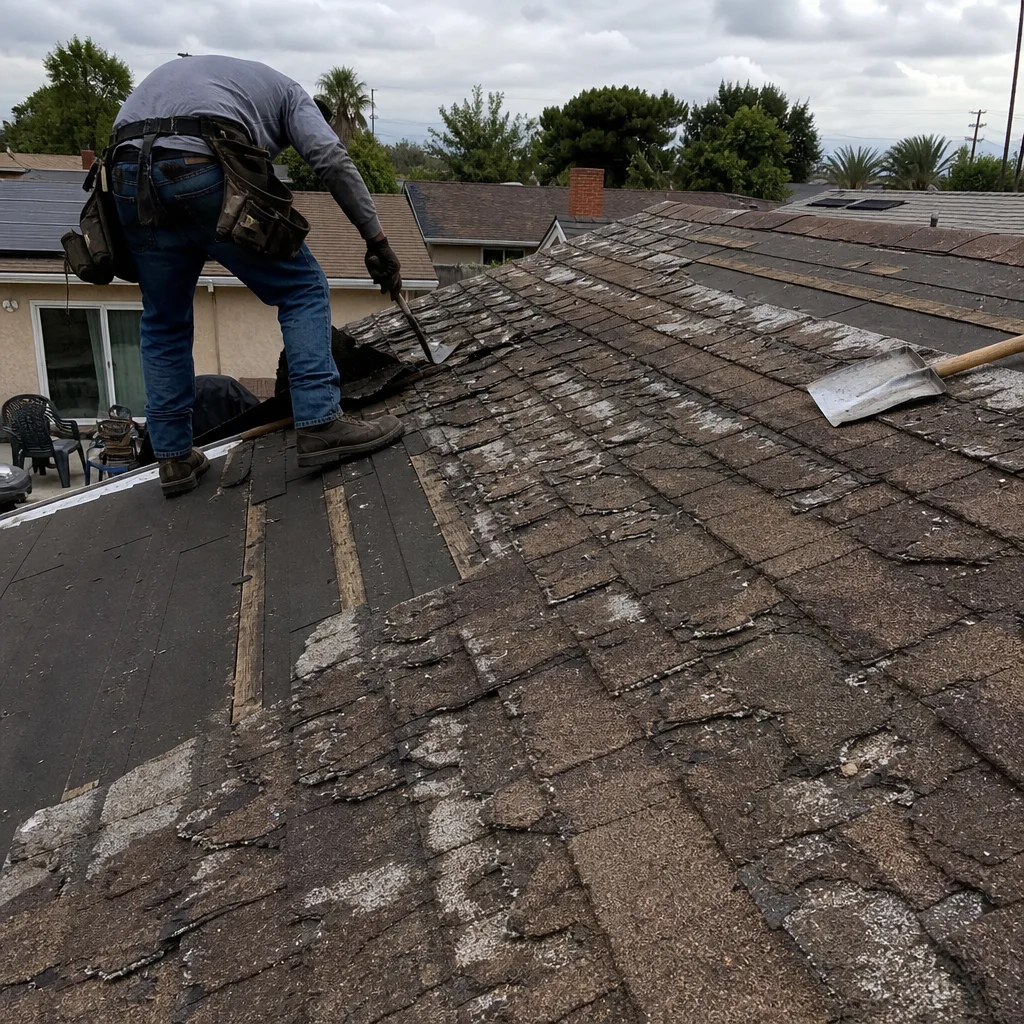
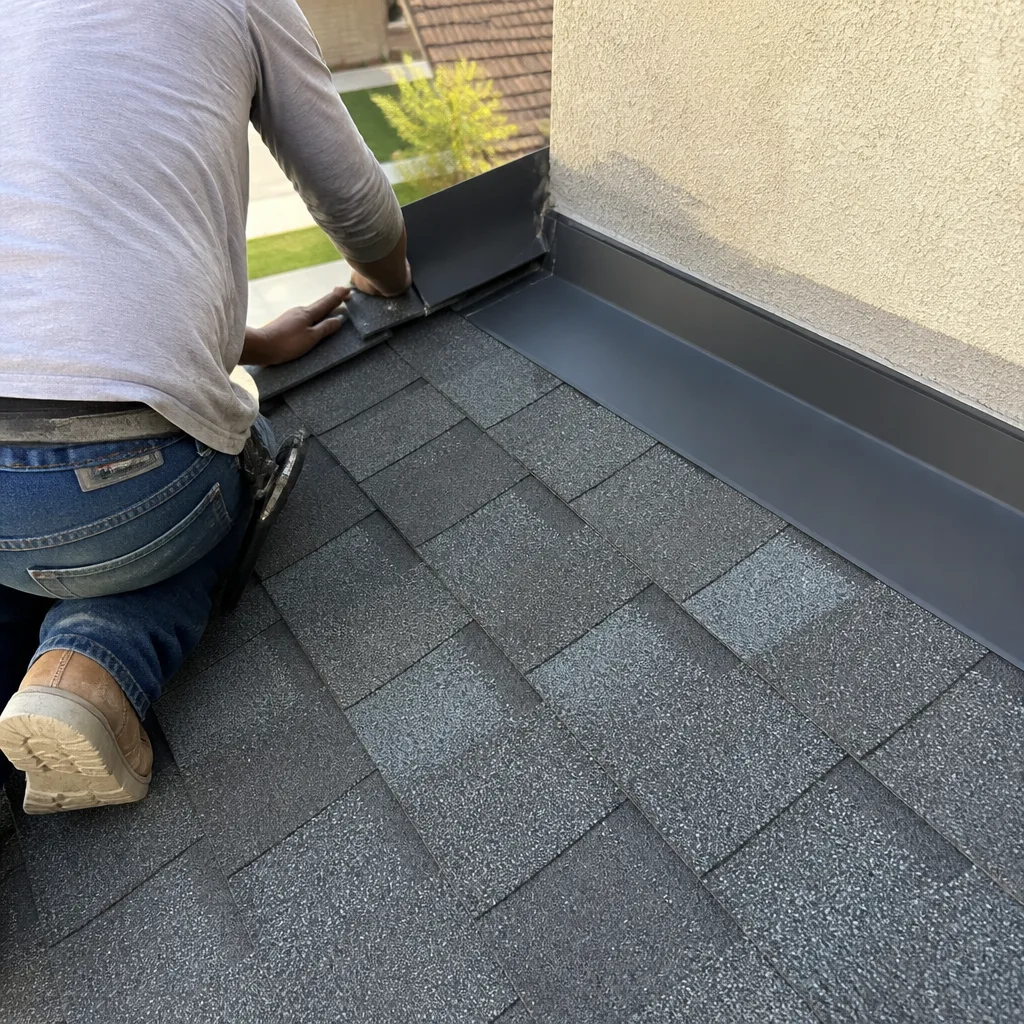
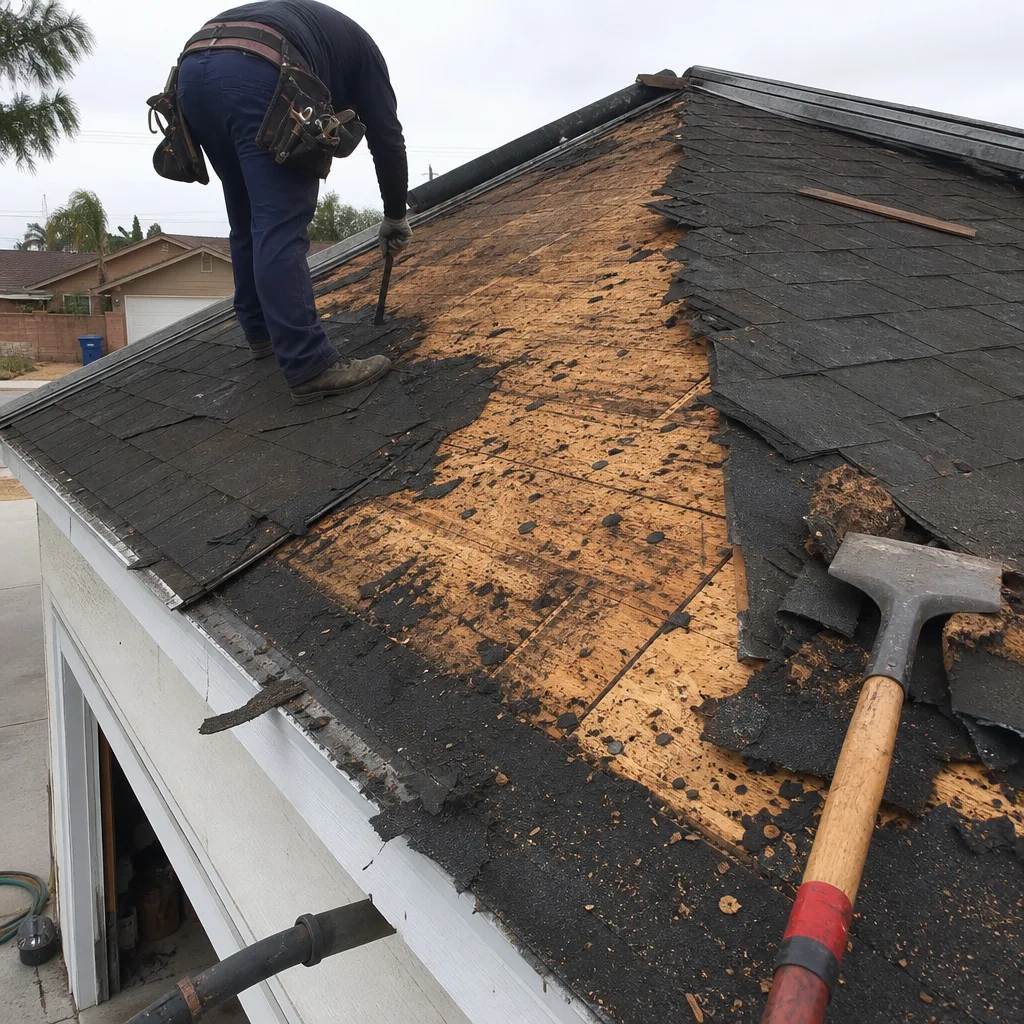
See the difference
 Before
 After
 Before
 After
 Before
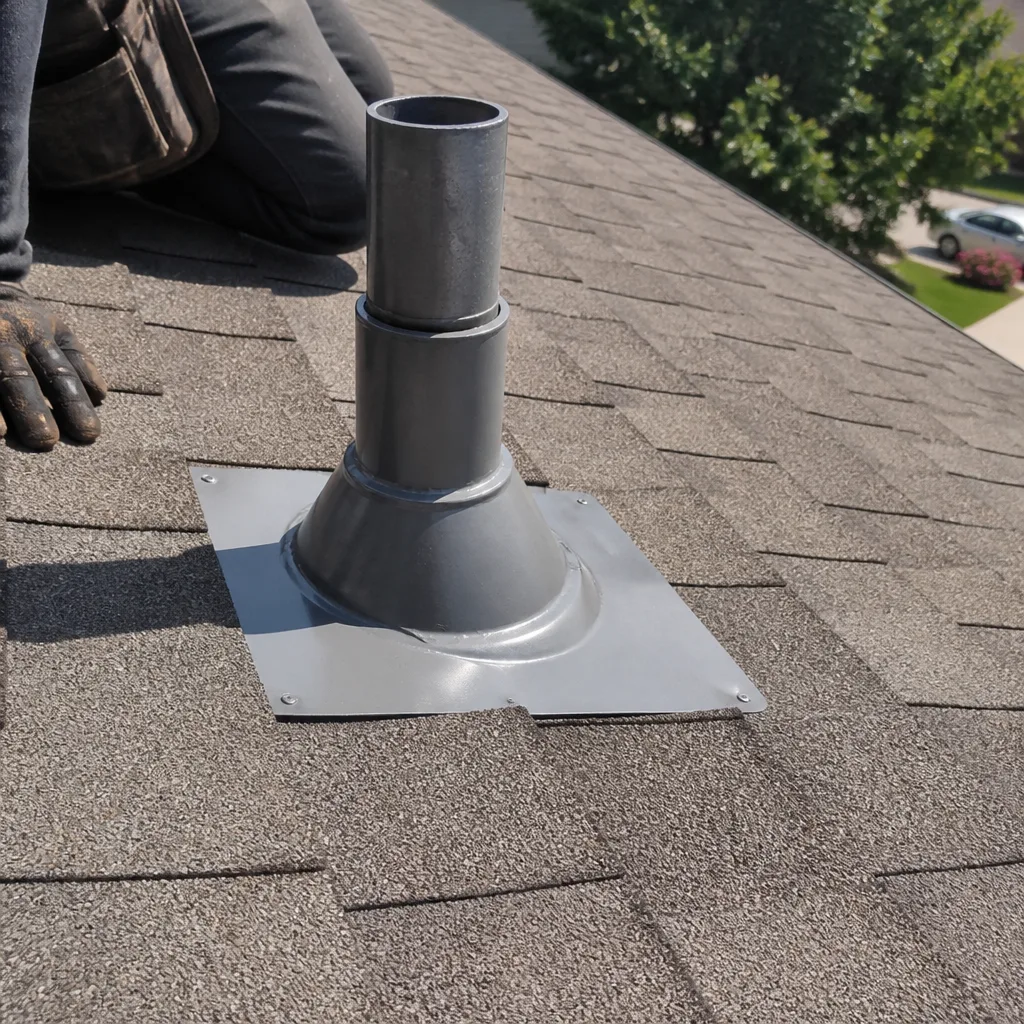 After
When to Call a Professional
Call a professional when you see water staining on a ceiling, when high winds have lifted shingles across a significant section of the roof, when granules are collecting in gutters in quantities that leave bare spots visible from the ground, or when your roof is past the twenty-year mark and you haven’t had a documented inspection. The moment you notice any of these signs, you’re in the information-gathering phase, not the buying phase. Get an inspection first. Get documentation. Then get bids. For Roof Repair Troubleshooting: Common Problems and How to Fix Them, see our detailed guide. Hawk Roof Repair offers free estimates in Ontario and covers the full lifecycle, inspection, repair, and replacement, so you’re talking to one company that can scope the real problem instead of three companies giving you three different sales pitches. Call (877) 731-1384 to schedule yours.
Frequently Asked Questions
A full roof replacement on a typical Ontario home generally runs between $9,000 and $18,000 depending on the roof size, shingle brand, slope, and whether decking replacement is needed, with partial repairs often falling between $400 and $3,000 for localized damage. For a detailed Roofing Cost Breakdown: The Ontario Homeowner’s Reference for 2026, see our pricing guide. The wide range is exactly why a documented inspection matters before you accept any number. Call (877) 731-1384 and we’ll scope your actual roof, not a generic square-footage average.
Search the contractor’s name or license number on the CSLB website at cslb.ca.gov and confirm that the license is active, holds a C-39 classification, and shows no disciplinary actions or complaints filed against the qualifying individual. If you’re hiring for roof work in Ontario, any contractor who can’t produce a matching license on the lookup is not someone you want on your roof.
Not unless you’ve independently determined that the single brand they install is actually the best fit for your home, which is difficult to verify when the contractor has a financial incentive to push that brand. A contractor who works with multiple manufacturers, like the seven brands Hawk Roof Repair sources, gives you an actual material choice rather than a margin-optimized default. We work with CertainTeed, Owens Corning, IKO, Atlas, and several others so the recommendation comes from your roof’s needs, not a supplier agreement.
Yes, roof replacement in Ontario requires a building permit, and the roofing contractor should pull it as part of the job. A contractor who suggests skipping the permit is asking you to carry risk that doesn’t belong to you, and any future sale of your home can be complicated by unpermitted roof work.
A legitimate roof inspection includes visual assessment of shingles, flashing, valleys, underlayment where accessible, and attic ventilation, documented with photographs and written notes that separate immediate failures from areas to monitor. It should not automatically conclude with a sales pitch, and it should be available as a standalone service. That’s how we approach Roof Inspection in Ontario, and it’s the only honest starting point for any repair or replacement conversation.
Asphalt shingle roofs in the Inland Empire typically last 18 to 25 years depending on the shingle brand, installation quality, ventilation, and sun exposure, with south-facing slopes often wearing out faster than north-facing ones. If your roof is past year 20 and you haven’t had a documented inspection, you’re at the stage where small failures become large expenses quickly.
It shouldn’t, unless hidden conditions like rotted decking or unexpected structural damage are uncovered, and a properly written contract requires a signed change order before any additional work proceeds or any additional charge applies. If a contractor tells you the price is “flexible” depending on what they find, get that conversation into writing before work begins.
The Bottom Line
Hiring a roofing contractor in Ontario is not a matter of collecting three bids and picking the middle one. It’s a process of verification, inspection, and material comparison that rewards homeowners who slow down and ask the questions a supplier-biased roofer hopes you’ll skip. Verify the C-39 license. Confirm insurance. Get a documented inspection before you hear a price. Ask about material access. Read the contract clauses that protect you and push back on the ones that don’t. The right contractor answers every question directly, documents the work, and lets the inspection, not the sales script, drive the recommendation. If you’re ready to start with an honest assessment, you can reach us at (877) 731-1384. The inspection comes first. Every time.
Written by the team at Hawk Roof Repair, serving Ontario since 2017.